Arbor Day
Anne of AvonleaArbor Day is the Avonlea Village Improvement Society’s public planting occasion: a day when civic plans take physical root in the village’s roadsides and grounds. The celebration converts shared hopes for a more beautiful settlement into work by individual members, while the later hailstorm makes the young trees’ vulnerability—and the community’s investment in them—plain.
The Society’s Planting Day
By the time the Society had passed its experimental stage, its members were pursuing improvements beyond the first plantings on the church grounds. Gilbert Blythe reported that local farmers were beginning to support the effort with roadside trees and hedges, and that visitors had praised Avonlea’s roadsides. The work was spreading from Society members to the wider community.
That spring, the planting was completed and the Improvers celebrated Arbor Day. Each member set out, or arranged to have set out, five ornamental trees. With forty members, the collective total was two hundred young trees. Arbor Day thus gave a measurable form to the Society’s growth: membership became labor, and labor became a conspicuous shared planting.
Plans Beyond the Celebration
The planting was part of a broader program of public improvement. Trees already planted on the church grounds were flourishing, while the school trustees had promised to fence in the school grounds the following year. Anne Shirley planned that, if the fencing went ahead, every scholar would plant a tree on a school Arbor Day; she also hoped to establish a garden in a corner beside the road. Her proposal extends the Society’s model to children, linking care for communal space with participation in its improvement.
Other projects depended on different groups and resources. The Ladies’ Aid Society was discussing improvements to the graveyard, which would require a subscription; Anne believed the Society itself could not take that project on after the hall affair. The distinction shows how Avonlea’s improvements were divided among local organizations, even when the Society had helped bring an issue to public attention.
Hailstorm and Aftermath
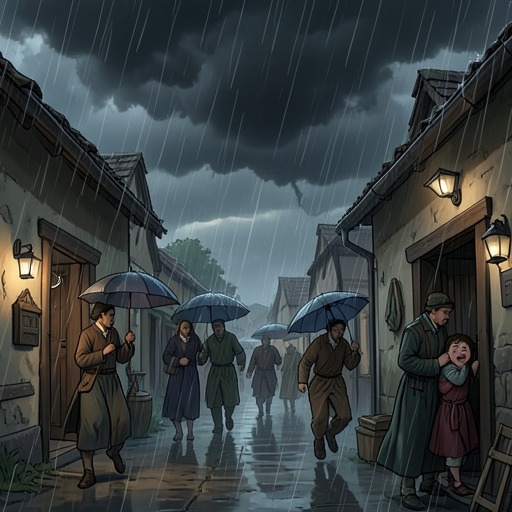
The young trees became a measure of the cost of the May 23 hailstorm. When the hailstones melted three or four days later, the damage was visible across fields and gardens: growing plants had been cut down, apple blossoms stripped, and large branches torn from trees. Of the two hundred trees planted by the Improvers, by far the greater number were snapped off or shredded.
The contrast is central to Arbor Day’s place in the story. The celebration records what collective effort could set in motion; the storm reveals how quickly that effort could be damaged by forces beyond the Society’s control. The broken plantings do not erase the Society’s plans, but they make its beautification work tangible as both an achievement and a vulnerable investment in Avonlea’s future.